The week started with bombshell Senate reports on the Russian campaign to influence the 2016 presidential election. We dived deep to explain how Russians used meme warfare to divide America, why Instagram was the Internet Research Agency’s go-to social media platform for spreading misinformation, and how Russians specifically targeted black Americans in an effort to exploit racial wounds.
Sunday, December 23, 2018
Sunday, December 2, 2018
FCA: Cyber Resilience a Top Concern for Financial Firms
The majority of financial firms rank cyber-resilience as their top concern, with people, visibility and third-party risk key challenges, according to the Financial Conduct Authority (FCA).
The UK regulator’s latest report, Cyber and Technology Resilience: Themes from cross-sector survey 2017 – 2018, is based on interviews with nearly 300 firms over the past 24 months.
The number of technology outages reported to the FCA over the past year increased 138%, with cyber-attacks accounting for 18% of operational incidents.
Sunday, November 18, 2018
Congress Votes to Create Federal Cybersecurity Agency
The United States House of Representatives voted unanimously to pass legislation creating the Cybersecurity and Infrastructure Security Agency (CISA) within the Department of Homeland Security (DHS). The CISA Act (H.R. 3359), which passed the Senate in October and now heads to the President’s desk to be signed into law, would reorganize DHS’ National Protection and Programs Directorate (NPPD) into a new agency and prioritize its mission as the Federal leader for cyber and physical infrastructure security.
“Today’s vote is a significant step to stand up a federal government cybersecurity agency,” said Secretary Kirstjen M. Nielsen. “The cyber threat landscape is constantly evolving, and we need to ensure we’re properly positioned to defend America’s infrastructure from threats digital and physical. It was time to reorganize and operationalize NPPD into the Cybersecurity and Infrastructure Security Agency. I thank Chairman Michael McCaul and Ranking Member Bennie Thompson for recognizing our critical role and both starting and completing this transformation in the House of Representatives. I also thank Chairman Ron Johnson and Ranking Member Claire McCaskill for their tireless support of the CISA Act in the Senate.”
Saturday, November 3, 2018
Biggest phish in the sea? These banks are growing targets
Phishing is the one cybersecurity issue that never seems to go away.
Despite the repeated warnings and efforts at raising customer awareness, cyberthieves continue to trick users with fake emails resembling legitimate ones, intended to direct them to a link where thieves can steal their credentials.
Perversely, cybercriminals are in fact exploiting that awareness, said Adrien Gendre, CEO of Vade Secure North America, which just released a report on phishing attempts via spoof emails in the third quarter.
Sunday, October 28, 2018
9.4 million clients affected in massive Cathy Pacific hack
Cathay Pacific Airways, Asia’s biggest international carrier, said a hacker gained access to information on about 9.4 million passengers, the third major global airline to report a data breach this year. The stock fell to the lowest level in more than nine years.
The Hong Kong-based carrier discovered suspicious activity on its network in March and confirmed the unauthorised access to some personal data in May, it said late on Wednesday. There’s no evidence any information has been misused and flight safety hasn’t been compromised, it said.
Sunday, October 21, 2018
THE TINY CHIP THAT POWERS UP PIXEL 3 SECURITY
THE GOOGLE PIXEL 3 has all the betterments you would expect from a flashy flagship smartphone: great camera, zippy processor, smarter AI. It also, though, comes with an unexpected bonus, one that works so deeply in the background you’ll likely never even know it’s there. The Titan M chip may be small and discreet, but it helps make the Pixel 3 and its beefier sibling, the Pixel 3 XL, among the most secure smartphones you can buy.
The Titan M draws inspiration from the Titan chip that helps safeguard Google servers, and while they differ some in the details—the Titan M draws much less power, for instance, so as not to tax your battery—they both share the task of protecting hardware against the most sophisticated, and devastating, attacks. And because it sits entirely apart from the Pixel 3's main processor, it helps cordon off the most sensitive data your smartphone holds.

Friday, September 28, 2018
How PSD2 and Open Banking will shape the future of payments
I have spent a lot of time at FinTech conferences over the last few years contemplating the impact of PayTech, RegTech, LendTech – and everything in between – on the future of the financial services industry.
While these conferences are often long on vision, they can sometimes be rather short on reality and it is usually at this point of confluence where the importance of good old regulation comes into play.
Friday, September 21, 2018
New Xbash Malware: A Deadly Fusion of Ransomware, Botnet, Cryptominer
With cryptocurrency once again making the headlines, a new malware called Xbash has been found at Palo Alto Networks by the researchers. The malware is reported to be a deadly fusion of botnet, ransomware and cryptocurrency mining software.
The probable targets of Xbash are – servers running on Windows or Linux, it attacks poorly protected systems with weak passwords or devices functioning with unpatched known vulnerabilities.
Friday, September 14, 2018
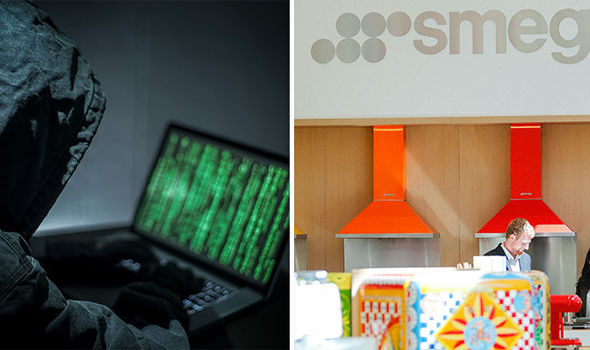
Household appliance brand totally SHUTS DOWN following ‘targeted HACK’
A POPULAR Italian appliance brand revealed it was forced to “totally shut down systems” to safeguard customers after a “targeted hack”.
Smeg UK, a premium Italian brand, said it had a team of investigators working on the issue.
The company had urged its customers to be “patient” while they work to resolve the problem.
It is understood the cyber attack occurred earlier this week.
A statement from the company said: "Unfortunately we have been the victim of a targeted cyber attack and as such have taken immediate steps to totally shut our systems down to protect our customers and ourselves.
Friday, September 7, 2018
No.1 Adware Removal Tool On Apple App Store Caught Spying On Mac Users
A highly popular top-tier app in Apple's Mac App Store that's designed to protect its users from adware and malware threats has been, ironically, found surreptitiously stealing their browsing history without their consent, and sending it to a server in China.
What's more concerning? Even after Apple was warned a month ago, the company did not take any action against the app.
The app in question is "Adware Doctor," the Mac App Store No. 1 paid utility and also ranked as the fourth most popular paid app on the store, which sells for $4.99 and markets itself to be the "best app" to prevent "malware and malicious files from infecting your Mac."
Friday, August 31, 2018
Botnet activity in H1 2018: Multifunctional bots becoming more widespread
http://www.itnewsafrica.com/2018/08/botnet-activity-in-h1-2018-multifunctional-bots-becoming-more-widespread/?utm_source=dlvr.it&utm_medium=twitter
Kaspersky Lab researchers have published a report on botnet activity in the first half of 2018, analysing more than 150 malware families and their modifications circulating through 60,000 botnets around the world. One of the most remarkable things uncovered by the research was growing international demand for multifunctional malware that is not designed for specific purposes but is flexible enough to perform almost any task.
Botnets – nets of compromised devices used in criminal activity – are harnessed by criminals to spread malware and facilitate DDoS and spam attacks. Using Kaspersky Lab’s Botnet Tracking technology, the company’s researchers continuously monitor botnet activity to prevent forthcoming attacks, or to nip a new type of banker Trojan in the bud. The technology works by emulating a compromised device, trapping the commands received from threat actors that are using the botnets to distribute malware. This provides the researchers with valuable malware samples and statistics.
Subscribe to:
Posts (Atom)
HSE finds recruiting cyber security staff 'difficult'
The Health Service Executive has said it is "especially difficult" to recruit cyber security staff right now because of the compet...
-
The Health Service Executive has said it is "especially difficult" to recruit cyber security staff right now because of the compet...
-
A senior official at the European Central Bank warned that banks embracing external data storage and other digital technology need to face...